
The Stability of Eternal Knowledge
Carlos Cardoso Aveline

* Two necessary factors must be combined along the way.
* One of them is the need to have a clear goal, a goal that takes into consideration the importance of the physical plane but goes beyond it. This sense of direction, onward and upward, must be constantly reviewed, reassessed and improved. However, if it has been correctly chosen, it will be fundamentally stable.
* The second factor to combine is the greatest possible open-mindedness, so as to perceive as many things we can in the various aspects of life. It is especially important to see the illusion of attachment to impermanent factors on the lower planes of consciousness, and the need to pay attention to enduring truths, on the higher levels.
* The combination of these factors allows the pilgrim to have a degree of firmness and flexibility, of knowledge and an ability to learn; of stability with transcendence.
Right Action in Unpredictable Timing
* At any time and circumstance, one must abstain from silly and wrong actions, as far as this is possible. Silly actions are those in which one’s soul is not present. On the other hand, from wrong actions and their results we can learn painful, yet valuable lessons if the intention was honest.
* Ask yourself every day whether your soul is present in whatever you do. Regardless of place, one has to actively engage in the search of valuable goals. It is our duty to try and discern right from wrong, and act accordingly.
* It is a blessing to learn from one’s own mistakes. By self-purification, the pilgrim qualifies himself to have a better discernment. Purification results from having elevated objects and a sincere purpose.
* However, one must remember three points: 1) Right action includes silence. 2) Correct contemplation is a form of action. 3) If persistent, a silent, noble intent effectively changes the world for the better, and it does so in invisible ways, according to an unpredictable timing.
* Are we surrounded by miraculous potentialities? Mikhail N. Katkov wrote: “If one looks at the Universe and has to choose between one of two extreme attitudes, it is easier to become a mystic than a nihilist. We are everywhere surrounded by miracles.” [1] M.N. Katkov was a famous Russian editor of the 19th century. He edited, influenced the contents of, and published novels by Dostoevsky, Tolstoy and Turgenev. He also published numerous articles written by Helena P. Blavatsky in Russian language.
The Secret Doctrine in the Andes
* A note to students. There are a number of correspondences and common points between “The Secret Doctrine”, by H.P. Blavatsky, and some passages of “The Huarochirí Manuscript” of the ancient Andean tradition.[2] The Huarochirí Manuscript was written in Peru around the year of 1598, to record traditional knowledge of the Andean people. Chapters 3 and 4 describe the process of Pralaya, “the death of the Sun”. Chapter 29 has at least one passage similar to the “Secret Doctrine”. The whole work deserves close examination on the part of theosophical students who are acquainted with the SD.
A Few Sentences from Andrew Avellino
* St. Andrew Avellino (1521-1608) makes the following recommendations to those who want to live a religious life:
* 1) “Love the Congregation [your Spiritual Community] as you love your mother.”
* 2) “Strive to recognize your faults, and do not reject their correction.”
* 3) “Fear small faults: they tarnish the purity of the soul.”
* 4) “In every circumstance of life, in prosperity and in affliction, bless God [the divine world and sacred teachers], and repeat with the prophet, Laudabo Dominum in omni tempore: Bless the Lord at all times.”
* 5) “Constantly strive to be faithful to your religious vocation. Repeat often with David, “This is my rest forever; here I will dwell, for I have chosen it. It is good for me to be with God and put my hope in the Lord God.” (Psalm 132:14-15)
* 6) “Never seek worldly comforts. Let your cell be your paradise.”
* 7) “Pray and read regularly and diligently.”
* 8) “Always be kind and a friend of peace. Avoid any word that might hurt a member of the community, whether slightly or greatly.”
* 9) “Frequently lift up your heart to God [the Universal Law, your own higher self, your spiritual Master]. Constant and fervent prayer brings peace to the soul and leads to perfection.”
* 10) “Associate only with God-fearing people [3], and never speak of useless things.” [4]
NOTES:
[1] From the book “Mikhail N. Katkov, a political biography”, by Martin Katz, Mouton & Co., The Hague, Paris, 1966, 195 pp., see p. 15.
[2] “The Huarochirí Manuscript”, University of Texas Press, first edition, 1991, 273 pages of larger size, pp. 132-133. In Spanish, see the three versions of the text, produced by Gerald Taylor, José Maria Arguedas, from Peru, and Jesus Lara, from Bolivia.
[3] “God-fearing people” – those who remember that even a long life is rather too short to obtain enough wisdom, and time should not be wasted.
[4] Translated from the book “S. Andrés Avelino, Clérigo Regular” by A. Veny Ballester, Editorial Vicente Ferrer, Barcelona, Spain, 1962, 639 pp., see p. 118.
000
The article “Thoughts Along the Road – 92” was published on the websites of the Independent Lodge of Theosophists on 11 January 2026. An initial version of it is part of the March 2023 edition of “The Aquarian Theosophist”, pp. 12-13.
000
Read more:

000
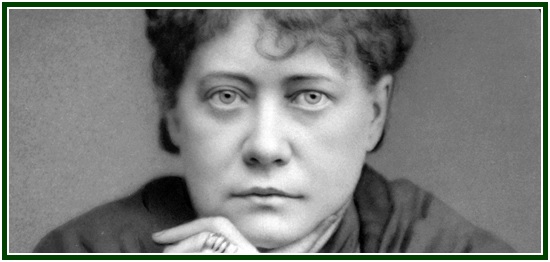
Helena Blavatsky (photo) wrote these words: “Deserve, then desire”.
000