
The Alchemical Process of Serendipity
Carlos Cardoso Aveline

* The development of one’s own will is the unavoidable task, if we want to preserve the voice of conscience, or, in other words, Antahkarana, Jacob’s Ladder, that spiritual bridge between Heaven and Earth which is always potentially present within us.
* He whose willpower is not stronger and more enduring than the circumstances around him has to be at the mercy of external stimuli, and often sways to and fro in blind obedience to the changing winds.
* Out of the confusions created by meaningless oscillation, the conscious perception emerges that one must train himself and strengthen his inner purpose.
* The pilgrim who combines reason with the ability to make firm decisions is also capable of overcoming obstacles, or avoiding them – or enduring them, as the case may be. He begins to learn from both victory and defeat, and constantly makes progress in the right direction, whether externally or internally.
* The direct experience of classical philosophy brings about the need to educate our will so that we become able to organize life around the best and the highest. The sensible pilgrim knows that patience, like perseverance, is the mark of a strong will.
* Except for special occasions, one’s efforts should be externally moderate. The sensible pilgrim can easily wait, when obstacles make it necessary. However, one way or another, he never stops making progress along the path to spiritual knowledge.
Practical Sources of Serendipity
* Time is one of the best teachers of the pilgrim. An effective waiting is never inert or motionless. On the contrary: it allows the pilgrim to develop a strong creative action on a higher plane of consciousness. And this is an alchemical process.
* Serendipity can be defined as “the ability to get in tune with the higher magnetisms of Karma”; with that subtle energy of the law of the universe which cures it all, which reconciles, recovers and optimizes every factor of life, while putting them all in a wider and brighter context.[1]
* Are we ready to receive the peaceful patterns of vibration that awaken good karma and expand it? Or are we attached to this and that form of narrowness, in our horizon?
* It is often difficult to renounce to one’s favorite kinds of suffering. However, when the pilgrim acknowledges the fact that his true nature is blissful, he leaves aside every pointless interaction with pain.
* It is not enough to practice right action and live in the atmosphere of that spontaneous altruism that comes from within. One has also to learn to stay away from unnecessary negativities.
* A strong will is necessary to do the right thing. An iron will is indispensable to abandon useless habits.
* In their narrow-minded search for money, the Western mass media radically attack the minds of their citizens with daily images of violence, side by side with images of exaggerated personal vanity, futility, and unfortunate egotistic actions. Such a poison has a deadly effect on the connection of the citizen with his own spiritual soul, and must be avoided by every learner of Eastern wisdom.
* A personal independence from collective forms of mind manipulation has to be established. Chronos, the god of cycles, is a loyal friend of truth: in due time, honest journalism will be born again in the West. The first step – here and now – is to remain lucid oneself.
* Altruism means irradiating positive energy: it does not consist in absorbing destructiveness. According to the Dhammapada, the seekers of the spiritual path must preserve their own happiness among the many who suffer with hatred and fear.[2] While doing this, truth-seekers can make a calm effort to share the peace of their hearts with those who are potentially open to a brotherly view of life.
* Spiritual victory is about developing forms of syntony with peaceful, elevated vibrations. Thus serendipity emerges in the middle of probation.
NOTES:
[1] See more on Serendipity, here.
[2] Read the article Lasting Happiness in Eastern Wisdom.
000
The article “Thoughts Along the Road – 95” was published on the websites of the Independent Lodge of Theosophists on 23 April 2026. An initial version of it is part of the June 2023 edition of “The Aquarian Theosophist”, pp. 9-10.
000
Visit the channel of The Aquarian Theosophist on YouTube:

000
Read more:
000
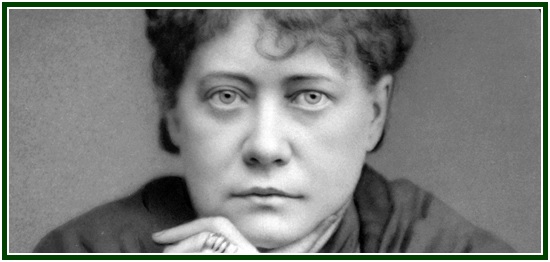
Helena Blavatsky (photo) wrote these words: “Deserve, then desire”.
000